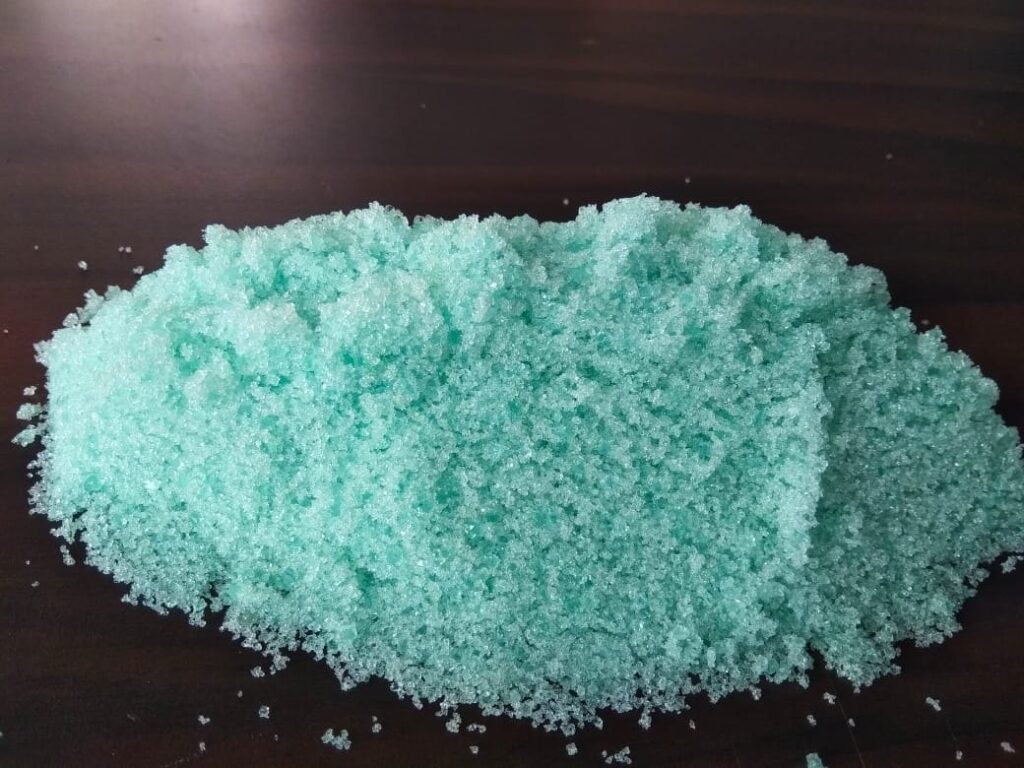

Usage of Ferrous Sulphate in Fertilizer Industry
Ferrous sulphate, also known as iron(II) sulphate, plays a significant role in the fertilizer industry, primarily due to its ability to supply essential iron to plants. Here are detailed insights into its usage: 1. Correcting Iron Deficiency in Plants Iron is a crucial micronutrient for plant growth, involved in various physiological processes such as chlorophyll synthesis, respiration, and enzyme function. Iron deficiency, often seen as chlorosis (yellowing of leaves), can severely impact plant health and crop yield. Ferrous sulphate is used to: 2. As a Component of Compound Fertilizers Ferrous sulphate is often included in compound fertilizers that contain a mix of macro and micronutrients. These fertilizers ensure a balanced supply of essential nutrients, including iron, which is vital for: 3. Improving Soil pH and Structure Ferrous sulphate can influence soil properties: 4. Combating Moss and Lichens in Lawns Ferrous sulphate is also used in lawn care products: 5. Blending with Other Fertilizers Ferrous sulphate is often blended with other fertilizers to create customized nutrient solutions. These blends can be tailored to the specific needs of different crops and soil types, ensuring optimal growth and yield. Application Methods Safety and Environmental Considerations Conclusion Ferrous sulphate is a vital component in the fertilizer industry due to its ability to correct iron deficiencies, improve soil properties, and enhance plant health and growth. Its versatility in application methods and compatibility with other nutrients make it an essential tool for farmers and gardeners aiming to achieve optimal crop yields and healthy landscapes.