Vrik Pharma

Uncategorized

magnesium sulphate
Uncategorized

Magnesium Sulphate Manufacturer Guide: Uses, Grades and Specifications

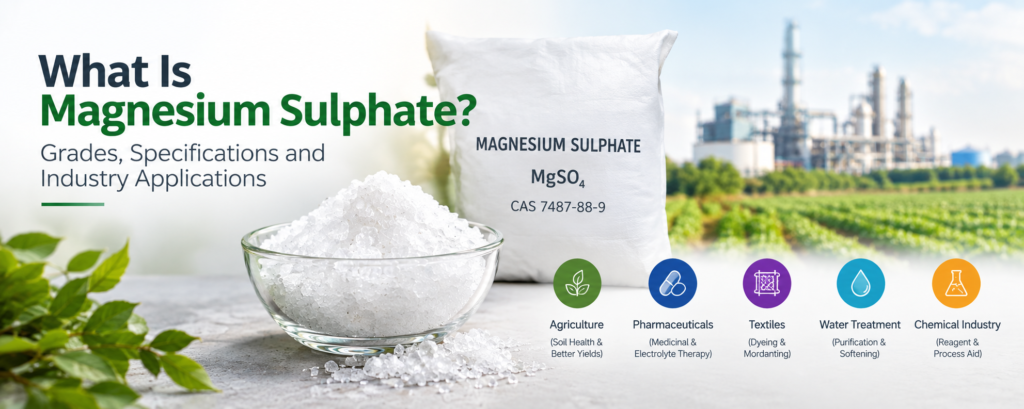
What Is Magnesium Sulphate? Say “magnesium sulphate” and most people picture Epsom salt on a pharmacy shelf next to the bath products. A magnesium sulphate manufacturer, on the other hand, ships something with a much wider job description than a foot soak. Chemically it’s MgSO4, built out of magnesium, sulphur and oxygen, molecular weight around 120.37 g/mol. It’s a white crystalline solid that goes into water fast, without leaving much residue behind. Pharma companies buy it for that reason. So do agriculture, textiles, water treatment and industrial chemistry buyers, each for a slightly different reason, but the solubility is what makes all of them show up. First-time buyers usually assume “magnesium sulphate” is one fixed thing. It isn’t. Two suppliers can both sell it under that exact name and still ship batches that behave differently once you’re running them through a process. Purity moves around. So does crystal size. A bag dissolves clean this month, and the next one leaves a faint film at the bottom of the tank, and nobody catches it until production is already underway. This guide covers the grades actually sold in the market, what’s worth checking before you sign a purchase order, and how buyers recognize a magnesium sulphate supplier India manufacturers stick with instead of dropping after one order. Magnesium Sulphate Grades and Specifications Magnesium sulphate isn’t one product with one spec sheet. Manufacturers split production across several grades, each held to a different testing bar depending on where it’s going. Grade Typical Purity Common Use Pharma Grade High purity, pharmacopeia-compliant Medicinal preparations, electrolyte therapy Feed Grade High purity Livestock and poultry premixes Fertilizer Grade Technical Soil amendment, correcting magnesium deficiency Industrial Grade Technical Textiles, water treatment, chemical manufacturing A supplier who can’t say straight which grade you’re buying is worth walking away from. A missing certificate of analysis is the same red flag. Get the paperwork on purity, moisture content and impurity limits before the order ships, not after it lands. Applications of Magnesium Sulphate Across Industries Magnesium sulphate shows up across more industries than buyers expect. Two reasons drive most of it: it delivers magnesium and sulphur where a process needs them, and it works as a dependable process aid anywhere solubility is the deciding factor. Take agriculture first. Magnesium and sulphur deficiency turns up often enough in Indian soil that correcting it has become a normal part of fertilizer blending rather than something specialized. Some farms mix it straight into the soil. Others spray it directly onto the crop. Either way, plants respond. Pharmaceutical use goes past the laxative most people already associate with Epsom salt. It shows up in electrolyte replacement therapy and, in specific clinical settings, in managing preeclampsia. Pharma-grade material carries a noticeably tighter purity ceiling than anything sold for industrial use, and that range of medical use is exactly why. Then there’s textiles, where it works as a mordant, getting dye to actually bond with fabric instead of fading after a few washes. Municipal and industrial water treatment setups use it to strip impurities and soften hard water on the way into a system, a use most consumers never think about. And in chemical manufacturing, it turns up as a drying agent or a reagent in organic synthesis, tucked into reactions nobody outside a plant would trace back to a bath salt. Five industries, five separate reasons to buy the exact same compound. Find a bulk magnesium sulphate supplier who gets what you’re actually using it for, and you’ll save more than what you’d shave off by chasing the cheapest quote per tonne. How to Choose the Right Magnesium Sulphate Supplier Before a purchase order gets signed, a short list of questions tends to separate the manufacturer worth reordering from the one that just talks a good game. Does every batch get tested, not just the sample that won the first order? Can you actually get a certificate of analysis and safety data sheet without chasing anyone for it? Is the manufacturer ISO-certified, and does day-to-day production hold up to that standard? Can order volume scale without your production schedule slipping? What happens if a batch fails your own quality check? A real supplier has a process ready for that. A weak one goes quiet. Vrik Pharma is worth naming here. It’s an ISO-certified manufacturer, ships magnesium sulphate at a minimum order quantity of 500 kg, and backs it with documentation buyers can actually verify. Price matters, nobody’s pretending otherwise. A cheaper drum that shows up with inconsistent purity usually costs more once you count the failed quality check and the batch you can’t use. FAQs What is magnesium sulphate used for? Mainly agriculture, pharmaceuticals, personal care, textiles, water treatment and chemical manufacturing, either as a straight source of magnesium and sulphur or as a process aid, depending on what the buyer’s making. Is magnesium sulphate the same as Epsom salt? Basically, yes. Epsom salt is just the everyday name for magnesium sulphate, usually in its heptahydrate form, and industrial or pharmaceutical grades are the same compound at heart, just tested to different purity levels. Is it safe to handle? In normal industrial settings, it’s not a difficult material. Store it somewhere dry, because it picks up moisture and clumps otherwise, and that’s really the one thing to watch for. What purity should a bulk buyer expect? That depends entirely on which grade you’re ordering. Pharma and feed grades sit noticeably higher than technical or industrial grade, so ask for a certificate of analysis rather than going by the name on the bag. Is there a minimum order quantity? It shifts from one supplier to the next, though 500 kg is a fairly common floor for bulk orders. Still worth confirming exact quantities, packaging and lead time before you commit. Choose Vrik Pharma Magnesium Sulphate Manufacturer in India On paper, magnesium sulphate reads like a simple, familiar compound. Try sourcing it for your own process, though, and grade, purity and documentation quickly become the things that
What Is Zinc Sulphate
Uncategorized

Zinc Sulphate Manufacturer Guide: Uses & Specifications

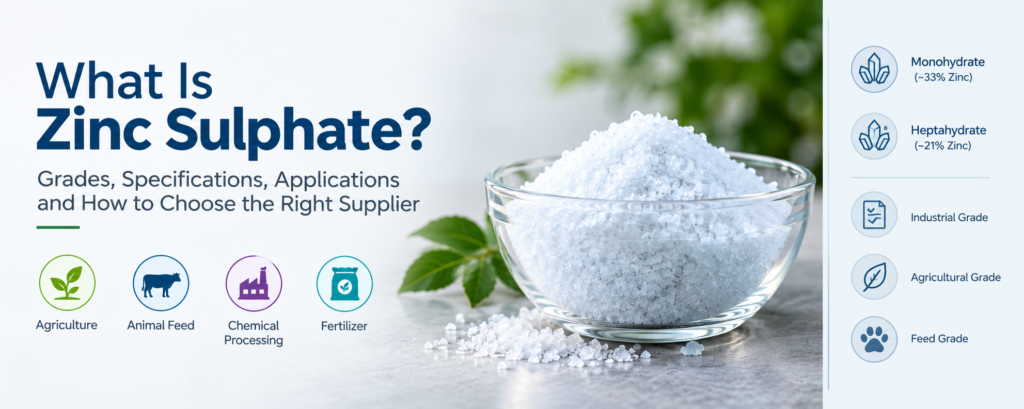
What Is Zinc Sulphate? Buyers tend to start asking hard questions about a zinc sulphate manufacturer right after a bad batch has cost them money, not before. Might as well get ahead of that. Zinc sulphate is ZnSO4, an inorganic zinc compound, and it dissolves fast in water. That single trait explains why it ends up in fertilizers, animal feed premixes, and process chemistry across so many Indian industries. Two forms dominate the market: monohydrate, sitting around 33% zinc, and heptahydrate, closer to 21% because it carries more crystallized water in its structure. Neither wins outright. It comes down to what you’re formulating and how much active zinc your process calls for per kilogram. Here’s the part that surprises newer buyers: two suppliers can sell “the same” zinc sulphate and still hand you products with meaningfully different purity, moisture content, and particle size. A batch that dissolves cleanly in one plant can leave grit behind in another, purely because of how finely it was ground. None of this becomes obvious on a spec sheet. It shows up mid-production, when your numbers don’t match what they were last month. So here’s what this blog covers instead: the grades on offer, the specs worth checking before you sign a purchase order, and how to spot a zinc sulphate supplier India manufacturers like Vrik Pharma Manufacturer keep reordering from, as opposed to one they try once and drop. Zinc Sulphate Grades and Specifications There’s no single, universal zinc sulphate. Industrial grade is built for chemical processing and manufacturing, where reactivity and batch-to-batch sameness matter more than shaving a rupee or two off the price per kilo. Agricultural grade goes down a different road entirely, formulated for fertilizers and micronutrient blends, with moisture and insoluble matter checked before it leaves the plant floor. Feed grade demands the most, since it eventually lands in the food chain and gets held to a tighter purity standard than either of the other two. Want a fast way to filter serious manufacturers from the rest? Ask for a certificate of analysis on every single batch, not the one polished sample they send to win your first order. It needs to show zinc content, moisture level, pH in solution, and heavy metal limits at a minimum. If a supplier hands that over without being chased, they’re probably not hiding much. Applications of Zinc Sulphate Across Industries Zinc is an essential micronutrient, and that one fact drives most of the demand here. Fertilizer manufacturing leans on it heavily because zinc-deficient soil is a widespread, documented problem across large stretches of India, not something confined to a handful of districts. Blend it into NPK formulations or sell it as a standalone micronutrient product, and either way, it’s addressing a real gap in the soil. Farmers push the compound further than fertilizer blending alone. Foliar sprays and soil treatments built around zinc sulphate for agriculture show up regularly on rice, wheat, and cotton fields, correcting a deficiency that’s been capping yield for years in places nobody thought to test the soil. Animal nutrition works differently. Zinc supports immune function and skin health in livestock and poultry, so feed manufacturers dose it into premixes with genuine precision, since too little wastes the investment and too much creates a fresh problem on its own. Chemical processing closes out the list, where zinc sulphate serves as a precursor and reagent in dye manufacturing, rayon production, and a few other reactions nobody outside a chemical plant would connect to something this unassuming. Four industries, four separate specification sheets, and that’s precisely why a bulk zinc sulphate supplier who understands your specific end use is worth more than one simply quoting the lowest rate per tonne. How to Choose the Right Zinc Sulphate Supplier in India Chasing the lowest price per kilogram feels smart for exactly one order cycle. What protects your margins over the long run is consistency. A supplier whose purity drifts between batches will eat up far more in rework than you ever saved on the invoice. Documentation separates the two kinds of manufacturers out there: those who test every batch leaving the plant, and those who pull the occasional sample and hope for the best. You can tell which type you’re working with by how fast they hand over lab reports when asked. Packaging and logistics matter too, in a very practical way. Vrik Pharma manufactures, for instance, backs every batch with testing and documentation buyers can actually verify before it ships. Packaging and logistics matter too, in a very practical way. Great chemistry means nothing if a supplier can’t pack and ship at your required scale, whether that’s 25 kg bags or a full tanker load, and that gap turns into a bottleneck fast. Then there’s industry experience, which people underrate constantly. A zinc sulphate manufacturer who has already served fertilizer producers, feed companies, or chemical processors walks in already understanding your compliance requirements, and that alone cuts a surprising chunk of back-and-forth out of onboarding. Why Vrik Pharma for Your Zinc Sulphate Sourcing Zinc sulphate looks like a simple compound right up until you have to source it yourself, at which point grade, purity, and consistency decide whether your fertilizer blend, feed premix, or chemical process performs the way it should. Buyers across agriculture, animal nutrition, and industrial manufacturing learn this sooner or later, often the expensive way. Vrik Pharma manufactures zinc sulphate across the grades built for exactly these applications, industrial, agricultural, and feed grade, backed by batch testing and documentation that holds up when you actually check it. Whether you’re formulating fertilizer, blending a feed premix, or sourcing for chemical processing, Vrik Pharma ships zinc sulphate built for that specific use rather than a one-size-fits-all product. Request specifications, grade details, packaging, and a quotation by calling +91 90167 06673 (domestic) or +91 93275 95918 (export), or email info@vrikpharma.com / sales@vrikpharma.com. You can also visit the Vrik Pharma zinc sulphate page.  FAQs What’s the real difference between monohydrate and