Zinc Sulphate for Agriculture: Selection, Formulation and Application Considerations
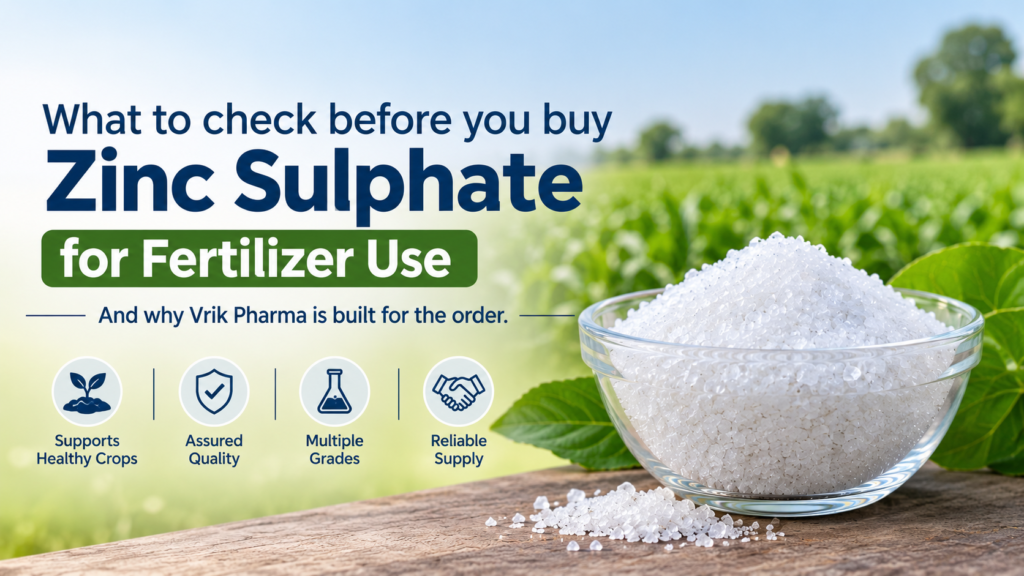
What to check before you buy zinc sulphate for fertilizer use, and why Vrik Pharma is built for the order. Zinc Deficiency Shows Up in the Field. It Starts at Procurement ZnSO4 looks like the easiest micronutrient on the list to source. It dissolves readily, it’s on every agri-input price sheet, and most fertilizer units have bought it for years. Then a batch comes in short on zinc, a micronutrient mix cakes in the godown, and the complaint lands at the dealer’s counter halfway through kharif. The zinc sulphate manufacturer behind the batch is usually where that story started. Vrik Pharma makes zinc sulphate at its own plant in GIDC Sarigam, Gujarat, for fertilizer manufacturers, micronutrient brands and agri distributors who would rather never have that conversation with their dealers. The need itself isn’t in question. Zinc deficiency runs across large stretches of Indian farmland, especially alkaline, calcareous and heavily cropped soils, and years of high phosphate use haven’t helped. Paddy shows it as khaira disease, rusty brown patches on the older leaves. Wheat and maize stay stunted, with pale stripes between the veins. Monohydrate or Heptahydrate: Pick the Grade Before the Price Form Typical Zinc Content Where It Works Best Heptahydrate (ZnSO4·7H2O) About 21% Zn Soil application and bulk blending Monohydrate (ZnSO4·H2O) About 33% Zn Concentrated mixtures, foliar sprays and fertigation A fertilizer blender making a soil product usually gets on fine with heptahydrate, since it’s cheaper per bag and goes into solution without fuss. A brand printing 33% zinc on the pack, or building a foliar spray, will end up on monohydrate sooner or later. Vrik Pharma manufactures both forms, so the choice comes down to what you’re actually making rather than what happens to be sitting in the warehouse that week, and its zinc sulphate heptahydrate line covers the soil-applied and blending work most agri buyers do. Work the quotes out per kilogram of actual zinc rather than per bag. Heptahydrate puts roughly 210 kg of zinc in a tonne and monohydrate closer to 330 kg, and the extra water in hepta gets paid for again on every truck and in every square metre of warehouse. The COA Tells You More Than the Rate Card A spec sheet says what a supplier plans to deliver. A batch COA says what actually turned up. When the assay on that certificate runs weak, the missing share is nearly always moisture or filler, and it comes straight out of your label claim. Heavy metals come next, and lead, cadmium and arsenic figures belong printed on the certificate rather than mentioned on a sales call. Anyone making a drip product should look at insoluble matter as well, since that’s the residue that blocks emitters in the middle of a season. Vrik Pharma’s published specification lists a 98.50% minimum assay and 21.5% zinc, with lead, arsenic and cadmium reported as nil, and because every batch is tested at the plant before it ships, the COA a buyer receives describes the lot on the truck rather than a sample from last season. Formulation and Field Application Blenders tend to find out about granule size the hard way. Zinc particles much finer than the NPK granules sink to the bottom of the bag in transit, and one farmer gets most of the zinc while the next gets almost none. Monsoon humidity causes the other half of the complaints, because zinc sulphate pulls moisture out of the air and a badly packed mix can turn into a solid block by August. That’s why Vrik Pharma ships in moisture-resistant packing, with 25 kg HDPE bags for smaller formulation units and jumbo bags or fibre drums for bigger blending lines. Pre-mixing with DAP is a mistake too, as zinc and phosphate react in the bag and the crop gets very little of the zinc that was paid for. Out in the field, most of it goes on as a basal dose before sowing or transplanting. Foliar sprays come in later, once symptoms are already visible, and since the solution runs a little acidic, farmers usually neutralise it with lime before it goes into the tank. How much to apply is a question for a soil test and the state agricultural university’s package of practices, not for last year’s habit. Questions Worth Asking Before You Sign Does every batch get tested, or just the sample that won the first order? Does a COA with heavy metal limits arrive with each shipment, without chasing? Are both monohydrate and heptahydrate available as your range grows? Will the packaging survive a humid monsoon in storage? With Vrik Pharma, the answer to all four is yes: every batch is tested before dispatch, a COA and MSDS travel with each shipment, both hydrate forms are on offer, and the packing is made for monsoon storage. FAQs Which form of zinc sulphate is best for agriculture? Blenders making a soil product mostly stay with heptahydrate because it’s cheaper, while anyone printing 33% zinc on the pack or selling a spray product tends to switch to monohydrate. Can zinc sulphate be mixed with DAP? Agronomists generally advise against it, since zinc and phosphate react in the bag and the crop ends up with only a fraction of the zinc that was applied. What’s Vrik Pharma’s minimum order quantity? Orders start at 500 kg, so a new buyer can run one trial lot through the plant before committing to truckloads or export volumes. Does Vrik Pharma send a COA and MSDS with every shipment? Every lot that leaves Vrik Pharma’s plant goes out with both, and export consignments also travel with the packing list and commercial invoice a clearing agent will ask for at the port. How long can zinc sulphate be stored? Two to three years is typical if the bags stay sealed and sit on pallets in a dry, covered warehouse, though a wet floor during the monsoon will shorten that a lot. Why Vrik Pharma Is Your Trusted Zinc Sulphate Manufacturer for