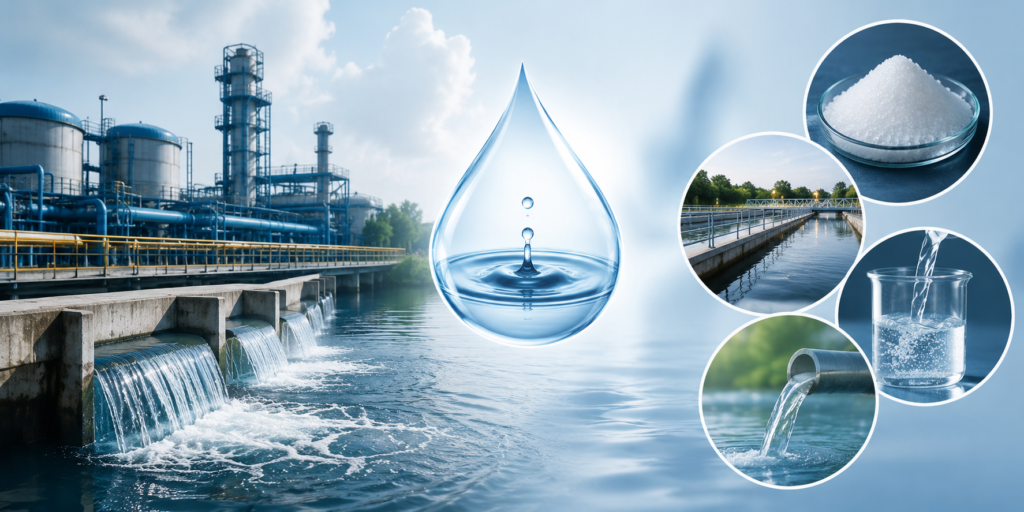
Water scarcity and stricter discharge requirements are some of the most critical issues that industrial manufacturers are currently facing. It is estimated by the United Nations that by 2030, there will be a shortfall of 40% between water demands and the availability of water globally. This makes every sector that consumes water accountable for the treatment, recycling, and discharge of water.
One of the compounds which remains in the background when it comes to this issue is sodium thiosulphate. It is applied in various industries such as municipalities, mines, textile industries, and aquaculture, among others, due to its effectiveness in water treatment through chemical neutralization. This guide explains how it works, the sectors in which it works best, and the qualities of a sodium thiosulphate supplier which you must consider.
What Is Sodium Thiosulphate?
Sodium thiosulphate (Na₂S₂O₃) is an inorganic compound that is known for its excellent reducing ability. Sodium thiosulphate can easily react with oxidizing agents such as chlorine, heavy metals, and cyanides, thereby transforming them into harmless substances. Such an ability is the very reason why sodium thiosulphate is so useful when it comes to water treatment applications.
There are two types of sodium thiosulphate: anhydrous and pentahydrate (Na₂S₂O₃·5H₂O). The pentahydrate sodium thiosulphate is widely used for water treatment purposes because of its better solubility. A good sodium thiosulphate producer provides both types of sodium thiosulphate with purity characteristics depending on the application.
Key Applications of Sodium Thiosulphate in Water Treatment
This compound has several uses at various levels of the industrial water treatment process:
| Industrial Water Treatment Process | Use of Sodium Thiosulphate | Industry Sector |
| Dechlorination | Removes residual chlorine and chloramines | Municipal water, swimming pool water, aquaculture |
| Heavy metal removal | Destroys metal ions by precipitation | Mining wastewater, industrial effluent |
| Cyanide neutralisation | Converts toxic cyanide to less harmful thiocyanate | Gold mining, electroplating |
| Effluent treatment | Destroys oxidising agents before releasing water | Textile, paper, chemicals production |
| Boiler water treatment | Removes oxygen to avoid corrosion | Power generation, industrial heat generation |
What Are the Industrial Benefits of Sodium Thiosulphate in Water Treatment?
This is where the application of sodium thiosulphate in water treatment finds its value in industrial processes.
1. Dechlorination
Residual chlorine is hazardous for the organisms living in water bodies and is strictly controlled. The use of sodium thiosulphate eliminates chlorine almost instantly, without creating any dangerous compounds and does not require sophisticated dosing equipment. It is the preferred compound for water companies, swimming pools and aquaculture centres.
2. Precipitation of Heavy Metals
The effluent discharged from industries such as mining, electroplating, and metallurgy contains soluble heavy metal compounds such as copper, lead, and cadmium. The use of sodium thiosulphate facilitates the transformation of soluble metal ions into insoluble forms, which then become easier to separate physically.
3. Cyanide Detoxification
Processes such as gold mining and electroplating produce wastewater containing cyanides. The chemical reaction involving sodium thiosulphate transforms cyanide to its derivative thiocyanate which is much less toxic. This application requires a very pure form of the chemical and consistently graded material sourced that should be available from a reliable industrial chemical manufacturer.
4. Boiler Water Treatment
Oxygen present in dissolved form causes corrosion to pipes, heat exchangers and the interior of vessels. Sodium thiosulphate removes oxygen from the boiler feed water to prevent damage to the machinery used in power plants and factories for producing steam or hot water.
Vrik Pharma is an India-based company engaged in the production of industrial chemicals, including sodium thiosulphate. We are a sodium thiosulphate manufacturer for our customers all around the world in water treatment plants, pharmaceutical and industrial applications.
What to Look for Before You Buy Sodium Thiosulphate?
The efficacy of using sodium thiosulphate as a water treatment agent depends entirely on the quality of the material available in the market. The substandard versions available will only introduce more contaminants into the treated water rather than reduce the contamination level. In the process of identifying a reliable sodium thiosulphate supplier, one should consider the following aspects:
- Grade and purity levels: Obtain a certificate of analysis for all batches of sodium thiosulphate. Water treatment, especially that which is close to areas where there is food production or aquaculture, needs to be done with either pharmaceutical-grade or food-grade substances.
- Proper packaging and handling: Sodium thiosulphate is sensitive to moisture and, thus, must be packaged in moisture-resistant packages.
- Consistency of supply: The treatment process is continuous. An exporter who has a stable lead time, sufficient inventory and traceability system avoids unnecessary treatment interruptions.
- Regulations compliance: To enter foreign markets, make sure the sodium thiosulphate exporter offers all necessary documents for regulations compliance, such as MSDS, country of origin documents, and other relevant environmental safety data.
Conclusion
The use of sodium thiosulphate in water treatment systems is not something new, but rather a substance that has been used reliably by industries for years now. From removing chlorine from urban water systems to deactivating cyanides in mining wastes, its reliability in different conditions makes it a necessity to procure in any industry where water purity is essential.
Vrik Pharma an established sodium thiosulphate supplier and exporter from India with expertise in producing and exporting high purity inorganic chemicals for water treatment, pharmaceuticals, and manufacturing applications. Our capabilities include bulk manufacturing and supply along with documentation for exports. You can contact us to discuss your requirements of sodium thiosulphate and supply terms.
FAQ – Sodium Thiosulphate Industrial Benefits
1. What amount of sodium thiosulfate should be added during water treatment process?
It depends on the level of chlorine that needs to be neutralized. On average, about 7 milligrams of sodium thiosulfate will neutralize 1 milligram of free chlorine. The accurate calculation can be done using water test results and consulting with the supplier of sodium thiosulfate or the treatment engineer.
2. Is it safe to use sodium thiosulfate for drinking water treatment?
Yes, if used in calculated amounts. Sodium thiosulphate is used for drinking water dechlorination in many countries, and it has been successfully applied in municipal water treatment systems around the world. There are food grade and high purity grades that can be purchased from specialized suppliers.
3. Can sodium thiosulfate be used for swimming pool dechlorination?
Yes. Sodium thiosulfate is one of the most popular agents for chlorine reduction in pool water, especially prior to discharge to drainage systems.
Related Posts
- Unlocking the Power of Sodium Hypochlorite: Your Guide to Hygiene and Health
Sodium hypochlorite (NaOCl) is one of the chemical compositions that are a fundamental part of…
- Sodium Metabisulfite: A Multifunctional Compound in Modern Applications
Sodium metabisulfite, also known as sodium pyrosulfite or disodium metabisulfite, is an inorganic compound with…
- Sodium Metabisulfite: A Key Chemical for Industry and Health in India
Sodium metabisulfite (Na2S2O5) is an important inorganic compound that has been extensively used in many…