Ferrous sulphate is a widely used compound across multiple industries, from agriculture to water treatment and manufacturing. However, not all ferrous sulphate is the same. One of the most common areas of confusion for buyers is the difference between industrial and agricultural grades.
Choosing the wrong grade can lead to performance issues, compliance concerns, or unnecessary costs. That’s why understanding the distinction between ferrous sulphate industrial grade and ferrous sulphate agricultural grade is important for procurement teams, distributors, and end users.
In this guide, we explain the key differences, practical applications, and what buyers should look for when sourcing from a reliable ferrous sulphate manufacturer.
What is Ferrous Sulphate?
Ferrous sulphate (FeSO₄) is an iron salt commonly used as a source of iron in various industrial and agricultural processes. It is typically available in different forms such as monohydrate and heptahydrate.
Its core function depends on the application:
- In agriculture, it corrects iron deficiency in soil and crops
- In industry, it is used in water treatment, chemical processing, and manufacturing
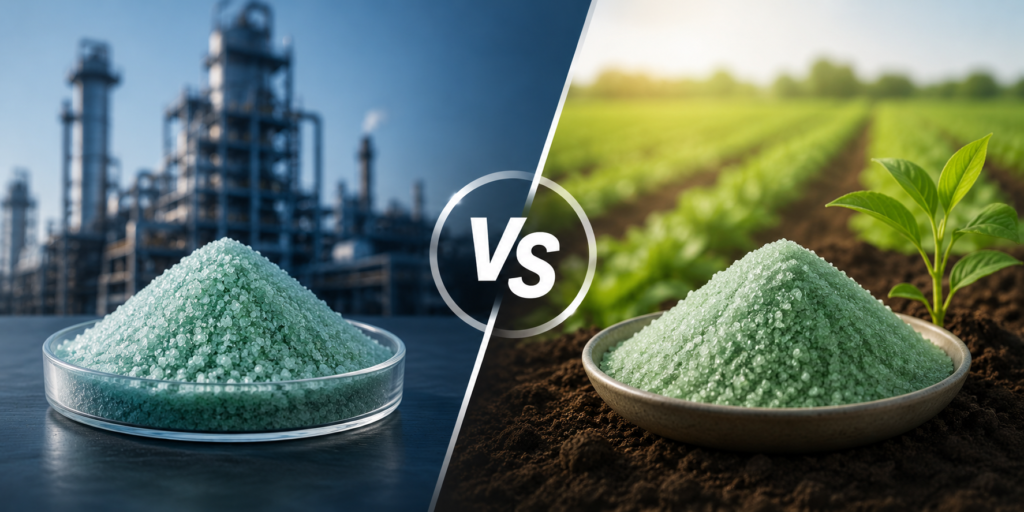
Ferrous Sulphate Industrial Grade vs Agricultural Grade
While the chemical base remains the same, the difference lies in purity, composition, and intended use.
1. Purity and Composition
Industrial Grade:
- May contain higher levels of impurities
- Composition varies depending on end use
- Not always suitable for direct soil or crop application
Agricultural Grade:
- Controlled composition suitable for plant use
- Lower levels of harmful impurities
- Designed for safe and effective nutrient delivery
2. Application and End Use
Ferrous Sulphate Industrial Grade
Used in:
- Water and wastewater treatment
- Pigment manufacturing
- Cement and construction processes
- Chemical production
Ferrous Sulphate Agricultural Grade
Used in:
- Soil application to correct iron deficiency
- Foliar sprays for quick nutrient absorption
- Lawn and turf management
3. Quality Standards and Compliance
Industrial-grade material is typically produced based on process requirements rather than crop safety.
Agricultural-grade ferrous sulphate must:
- Meet safety guidelines for soil use
- Maintain consistency for predictable crop response
- Be suitable for long-term agricultural application
4. Physical Characteristics
Differences may also be seen in:
- Granule size or powder form
- Solubility
- Moisture content
These factors directly impact how the product performs in real-world applications.
Ferrous Sulphate Industrial Grade vs Agricultural Grade
|
Parameter |
Ferrous Sulphate Industrial Grade |
Ferrous Sulphate Agricultural Grade |
|
Primary Use |
Manufacturing, water treatment, construction processes |
Soil application, crop nutrition, micronutrient correction |
|
Purity Level |
Moderate to variable (depends on industrial process) |
Controlled and consistent for safe agricultural use |
|
Impurities |
May contain higher levels of process-related impurities |
Lower impurity levels suitable for soil and plant health |
|
Compliance Focus |
Based on industrial specifications |
Aligned with agricultural and fertilizer guidelines |
|
Suitability for Crops |
Not recommended |
Specifically designed for crop application |
|
Cost Perspective |
Lower upfront cost in some cases |
Better long-term value for agricultural use |
Application-Based Comparison
|
Application Area |
Industrial Grade Usage |
Agricultural Grade Usage |
|
Water Treatment |
Used to remove impurities and control contaminants |
Not applicable |
|
Chemical Processing |
Acts as a raw material or process chemical |
Not applicable |
|
Construction |
Used in cement and related applications |
Not applicable |
|
Soil Application |
Not suitable due to impurity concerns |
Used to correct iron deficiency in soil |
|
Foliar Spray |
Not recommended |
Used for quick nutrient absorption in plants |
|
Turf & Lawn Care |
Not used |
Commonly used for lawn greening and maintenance |
Physical & Handling Characteristics
|
Property |
Industrial Grade |
Agricultural Grade |
|
Form |
Powder or granules (varies by industrial need) |
Powder or granules optimized for field application |
|
Solubility |
May vary depending on grade |
Consistent solubility for effective plant absorption |
|
Moisture Content |
Less controlled |
Controlled to maintain stability and usability |
|
Particle Size |
Not always standardized |
More uniform for even application |
|
Handling Requirements |
Based on industrial safety protocols |
Designed for ease of handling in agricultural environments |
Key Considerations When Sourcing Ferrous Sulphate
1. Define the End Application
Clearly identify whether the use is industrial or agricultural before purchasing.
2. Check Product Specifications
Look for:
- Iron content
- Purity levels
- Moisture content
3. Evaluate the Manufacturer
Work with an experienced ferrous sulphate manufacturer who understands both grades and their applications.
4. Packaging and Handling
Proper packaging ensures product stability, especially for export and long-distance shipping.
5. Supply Reliability
Consistency in supply is critical for industries and distributors managing ongoing demand.
Industry Applications at a Glance
Industrial Use Cases
- Wastewater treatment plants for removing impurities
- Manufacturing processes requiring iron salts
- Construction applications such as cement treatment
Agricultural Use Cases
- Correcting iron chlorosis in crops
- Improving soil micronutrient balance
- Enhancing turf and lawn quality
About Vrik Pharma
At Vrik Pharma, we operate as a manufacturer, exporter, and B2B supplier of chemical products serving both industrial and agricultural sectors.
Our focus includes:
- Controlled manufacturing processes for consistent product quality
- Supplying both ferrous sulphate industrial grade and ferrous sulphate agricultural grade
- Supporting bulk supply and international logistics
- Understanding application-specific requirements across industries
We aim to provide materials that perform reliably in their intended use, helping our partners maintain consistency in their operations.
Conclusion
Understanding the difference between industrial and agricultural grades of ferrous sulphate is essential for making the right purchasing decision. While both serve important roles, they are not interchangeable.
Selecting the correct grade ensures better performance, compliance, and long-term value. Whether for manufacturing processes or crop nutrition, working with a knowledgeable ferrous sulphate manufacturer helps reduce risks and improve outcomes.
FAQs
1. What is the main difference between industrial and agricultural ferrous sulphate?
The key difference lies in purity and intended use. Industrial grade may contain higher impurities and is used in manufacturing processes, while agricultural grade is designed for safe use in soil and crops.
2. Can industrial-grade ferrous sulphate be used in agriculture?
It is not recommended. Industrial grade may contain impurities that can affect soil health and crop performance. Agricultural-grade material is specifically formulated for safe application.
3. What is ferrous sulphate used for in agriculture?
It is used to correct iron deficiency in plants, improve chlorophyll production, and support healthy crop growth. It is commonly applied to soil or as a foliar spray.
4. How do I choose the right ferrous sulphate grade?
Start by identifying your application. For farming and soil use, choose agricultural grade. For manufacturing or water treatment, industrial grade is more suitable.
5. What should buyers check before sourcing ferrous sulphate?
Buyers should review product specifications, purity levels, packaging quality, and the supplier’s ability to maintain consistent supply.
6. Is ferrous sulphate available in different forms?
Yes, it is commonly available in monohydrate and heptahydrate forms. The choice depends on application needs and required iron content.
7. How is ferrous sulphate packaged for export?
It is typically packed in moisture-resistant bags or bulk packaging to ensure stability during storage and transportation.
Related Posts
- Applications of Ferrous Sulphate in Agiculture
Among various applications of Ferrous Sulphate one of the most important application of ferrous sulphate…
- Agricultural Micronutrients and Specialty Fertilizers Guide
Nowadays, every hardworking farmer dreams of fields filled with healthy crops, better fertility and great…
- Usage of Ferrous Sulphate in Fertilizer Industry
Ferrous sulphate, also known as iron(II) sulphate, plays a significant role in the fertilizer industry,…